Sorting out “black” swallowtails

Spying on ‘Fireworks’ Goldenrod Pollinators
November 22, 2025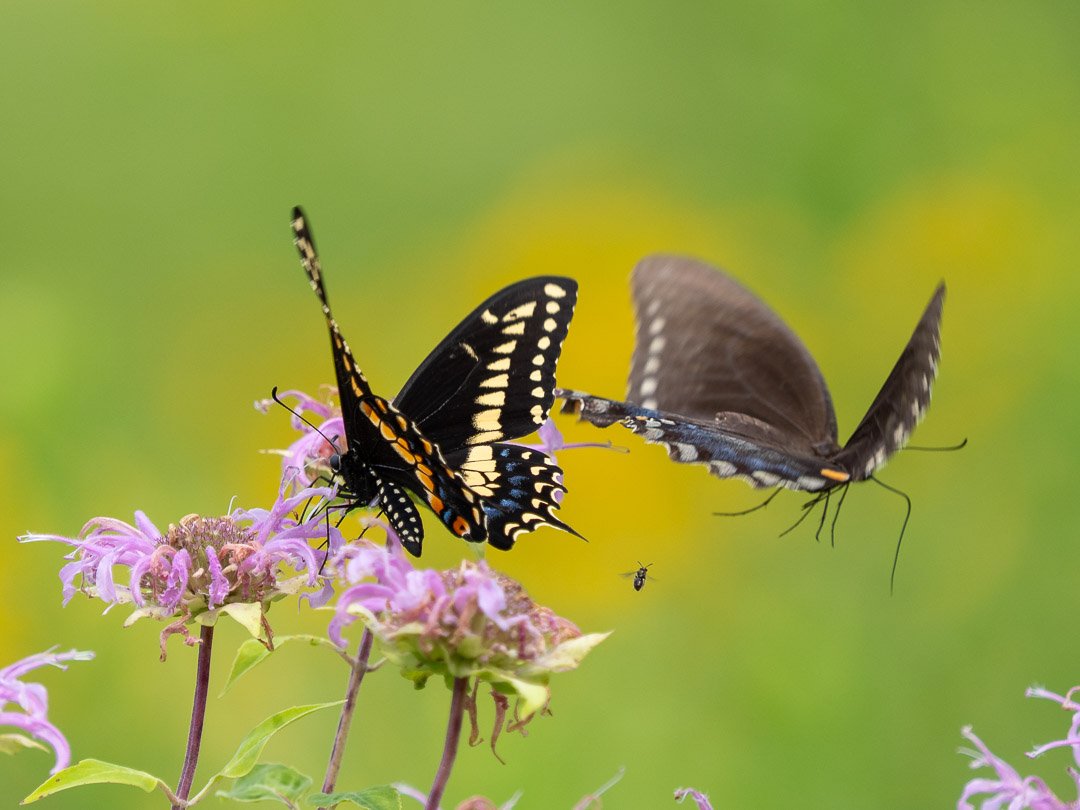
Sorting out “black” swallowtails
Most people will quickly identify these 3 dark butterflies as “black” swallowtails. However, all 3 are different species and only one is named Black. These species share common traits of black forewings, iridescent blue dusting on the hindwings, and various amounts of yellow dots. To complicate identification further, males and females of each species have differences. The undersides of the wings are different again. Plus there is individual variability as well as wear and tear that can make identification challenging – even for the identification apps.
Upper side of dark swallowtails with open wings (dorsal view)
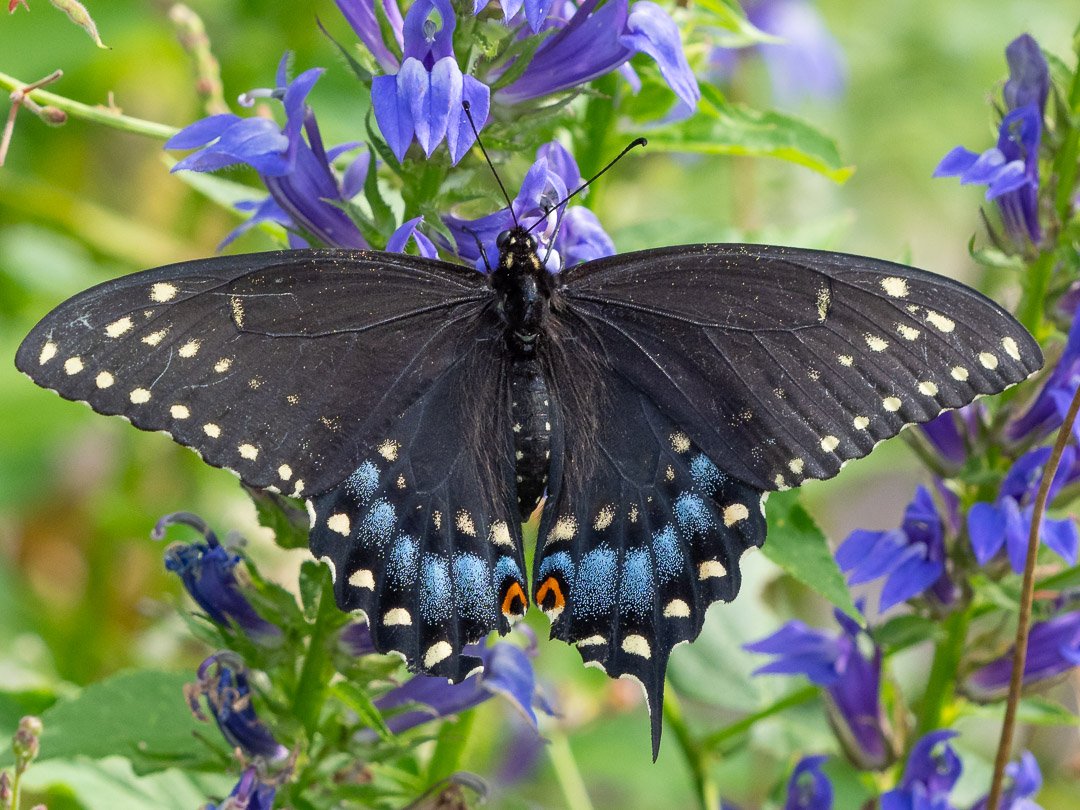
Black Swallowtail (female) - notice the black dot in the orange circle
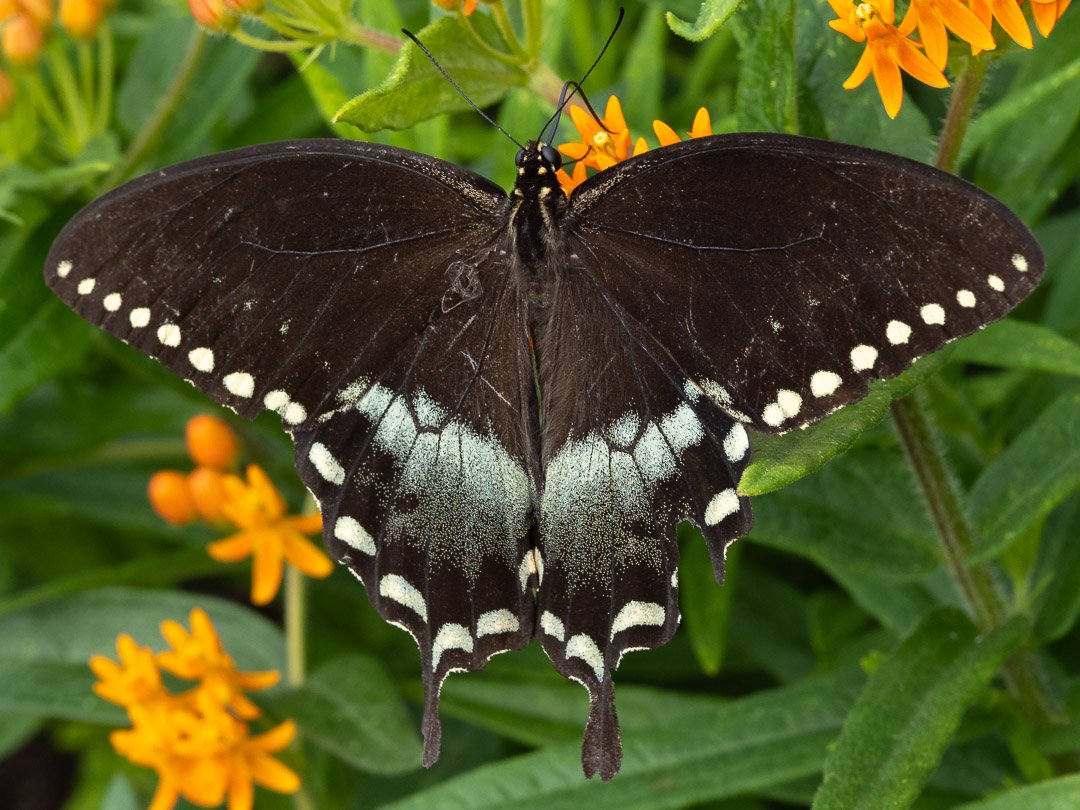
Spicebush Swallowtail (male) - usually a single row of yellow dots on forewing
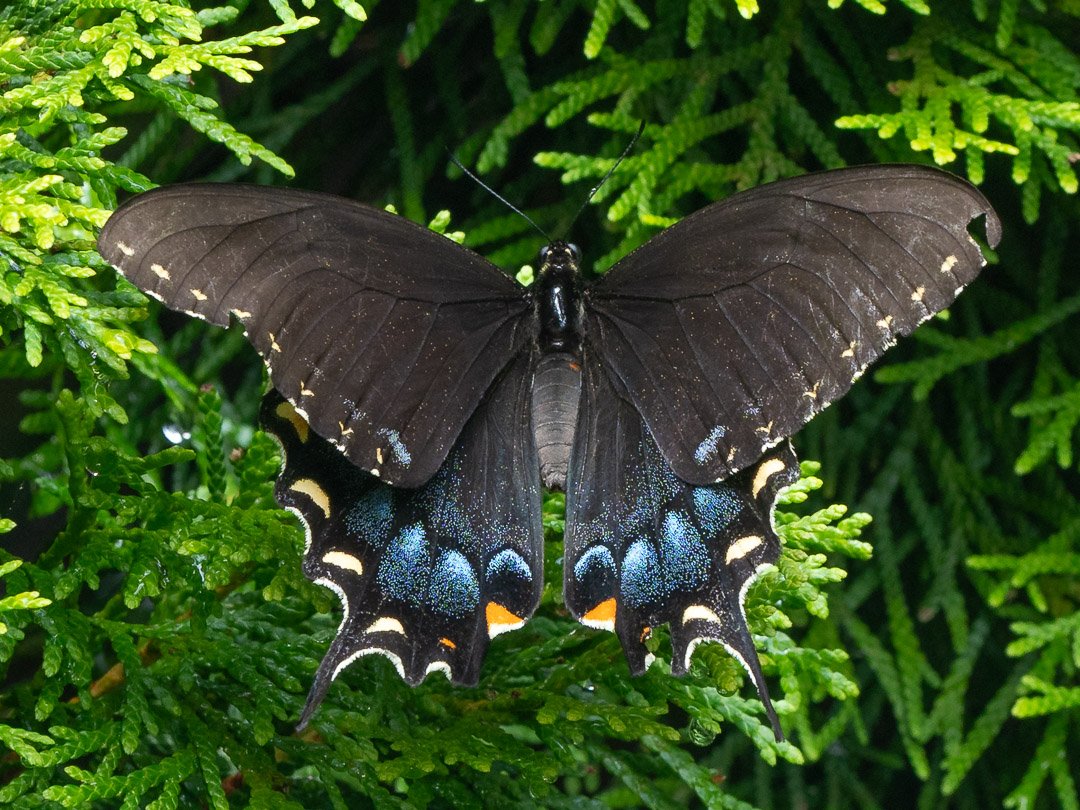
Eastern Tiger Swallowtail (female dark morph) - yellow on the forewing is more dashed than dots
Why, oh why, do groups of insects have to look so similar?! Well – that’s their intent. Butterflies don’t have defenses like stingers. They aren’t capable of fast or evasive flight either. But a few species of butterflies have a survival strategy that makes them unpalatable to prey by feeding on host plants as caterpillars that contain toxins. The toxins are retained in the adult butterfly stage too. In the case of dark swallowtails, that’s the Pipevine Swallowtail. Over time, the individuals of other butterfly species that most closely resembled a toxic species were more likely to avoid predation because of their looks until eventually their species has developed closely similar traits. This phenomenon has a name - Batesian mimicry.
Under side of dark swallowtail wings (ventral view)
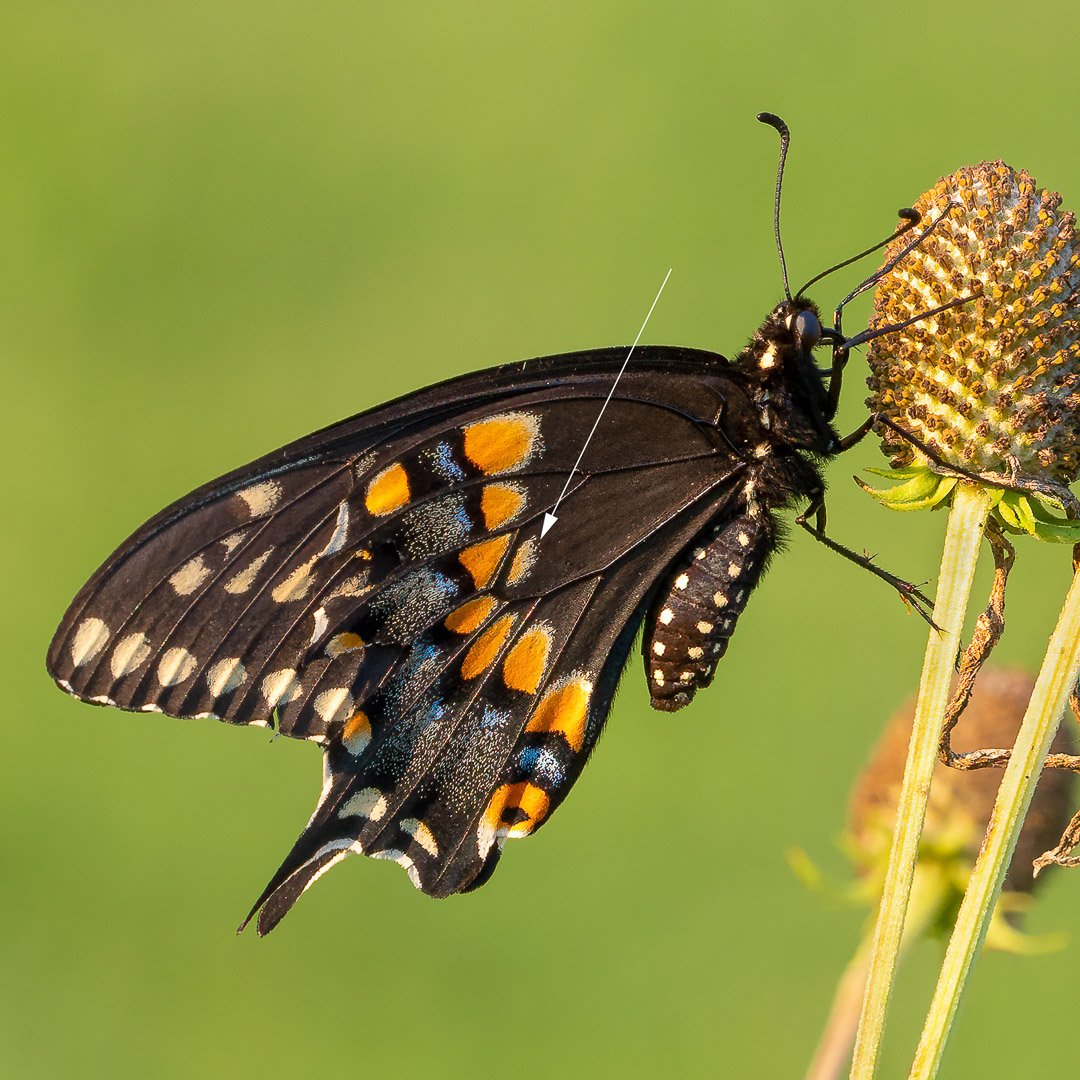
Black Swallowtail - has an extra orange cell
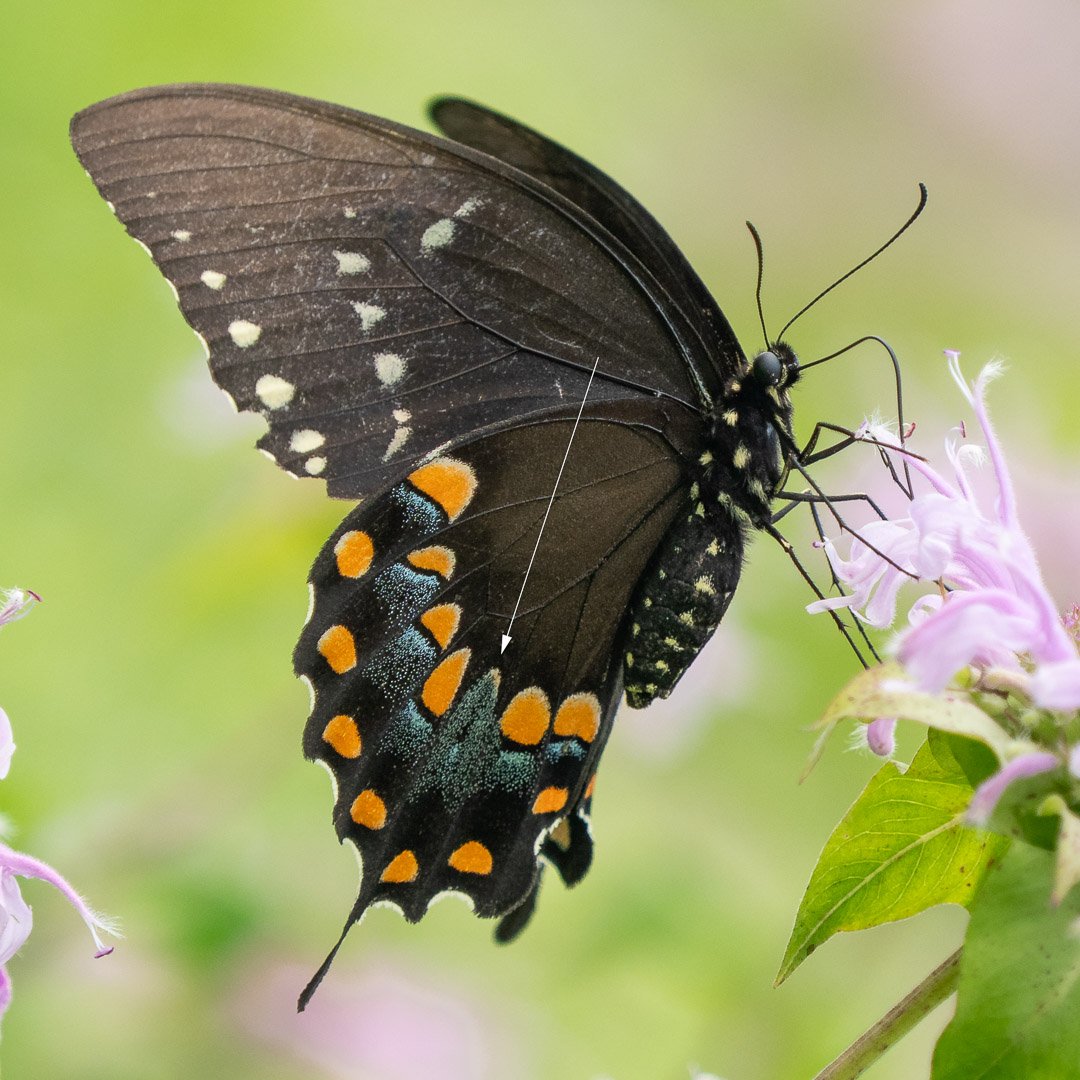
Spicebush Swallowtail - has a protruding cell that interupts the orange dots (but it can be capped in orange)
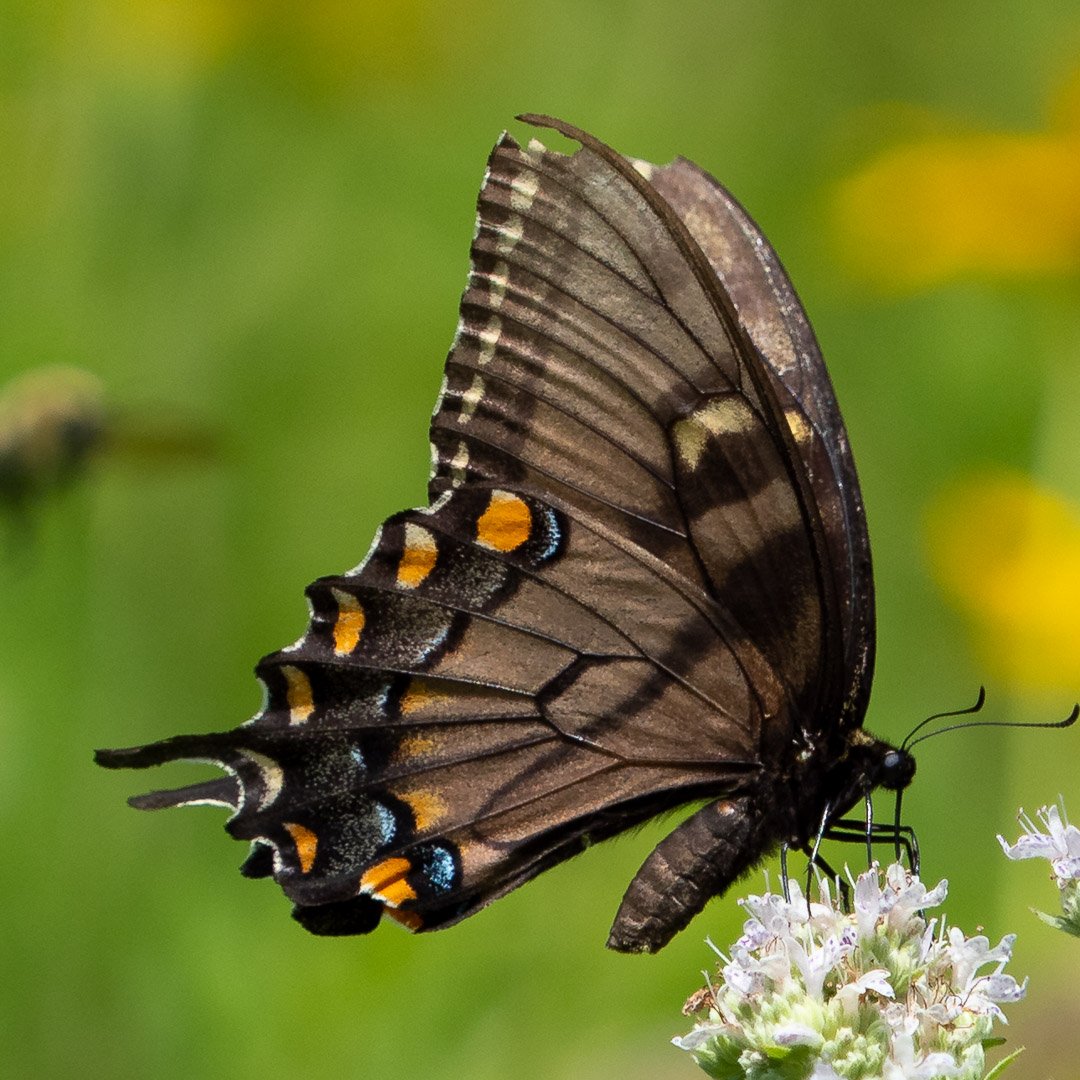
Eastern Tiger Swallowtail - usually you get a hint of the tiger stripes
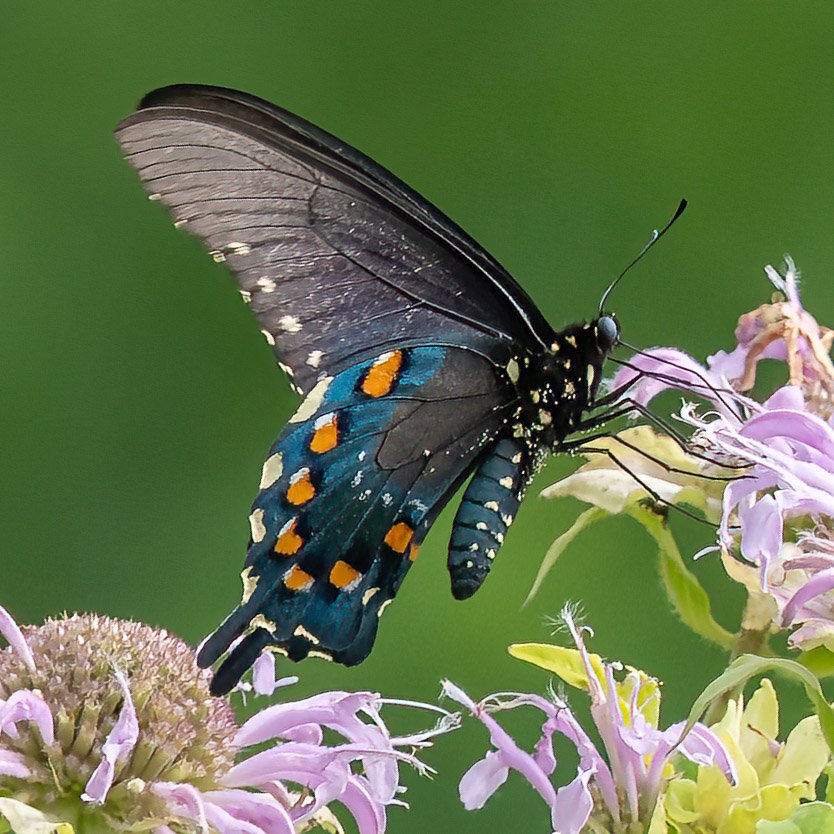
Pipevine Swallowtail - a single row of orange and amazing blues
Strangely, the Pipevine Swallowtail is an uncommon migrant to my northern edge of its range. I’ve only seen a handful of individuals – and thus don’t have many photos to chose from. Spicebush Swallowtails are by far more common than Black Swallowtails, even though I have ample host food for an army of either. Lastly, the dark morph Eastern Tiger Swallowtail female can be present in larger numbers in the brood flying during July. The percentage of dark morph individuals tends to be much higher in the south than the north for this reason. I find it odd how many dark morph females I find considering how few Pipevine Swallowtails are around.
And more!
With the typical side view as swallowtails flutter, it's hard to keep track of whether you're seeing the top or bottom side of the wings. Here's another round of top side (dorsal).
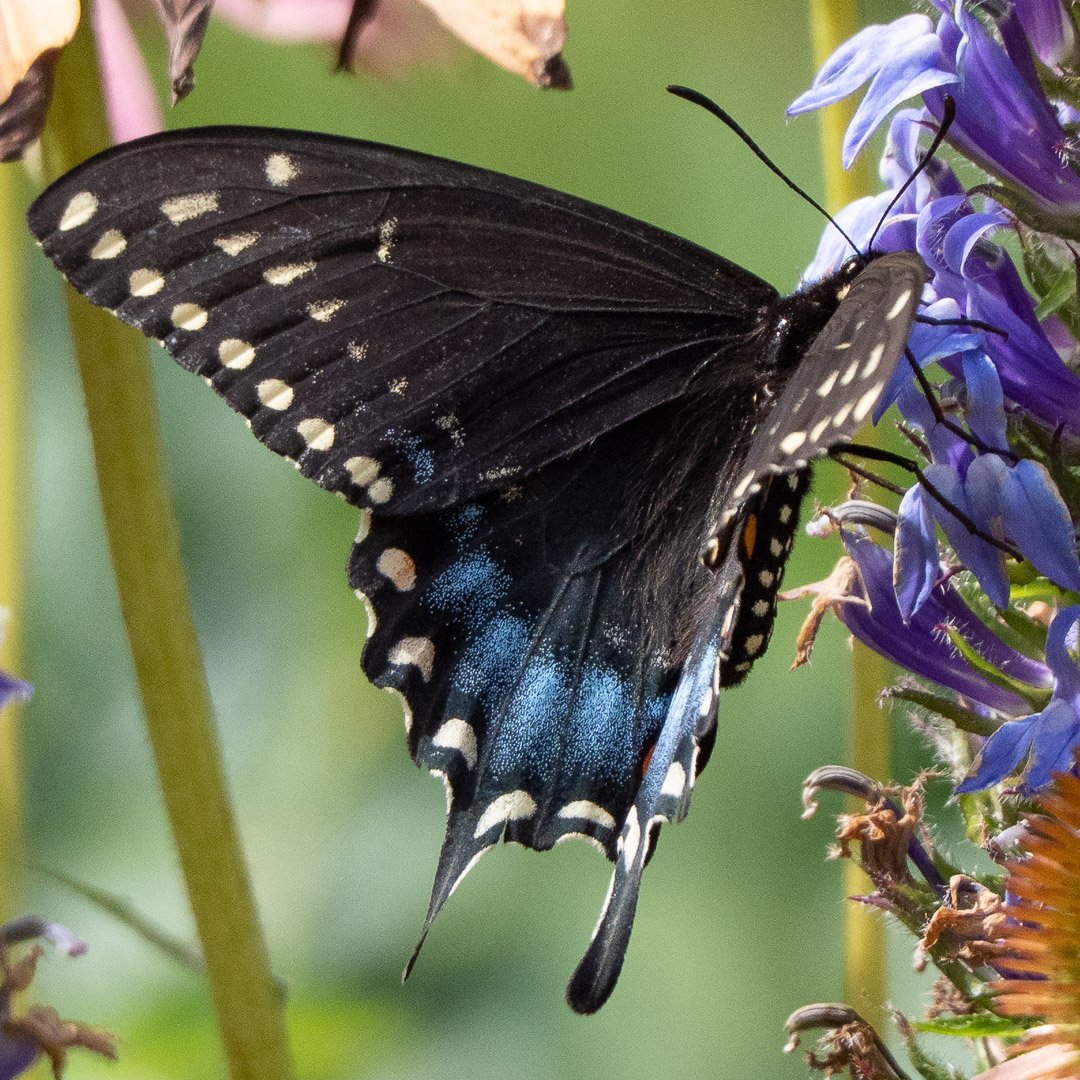
Black Swallowtail - two prominent rows of yellow dots on the upper forewing
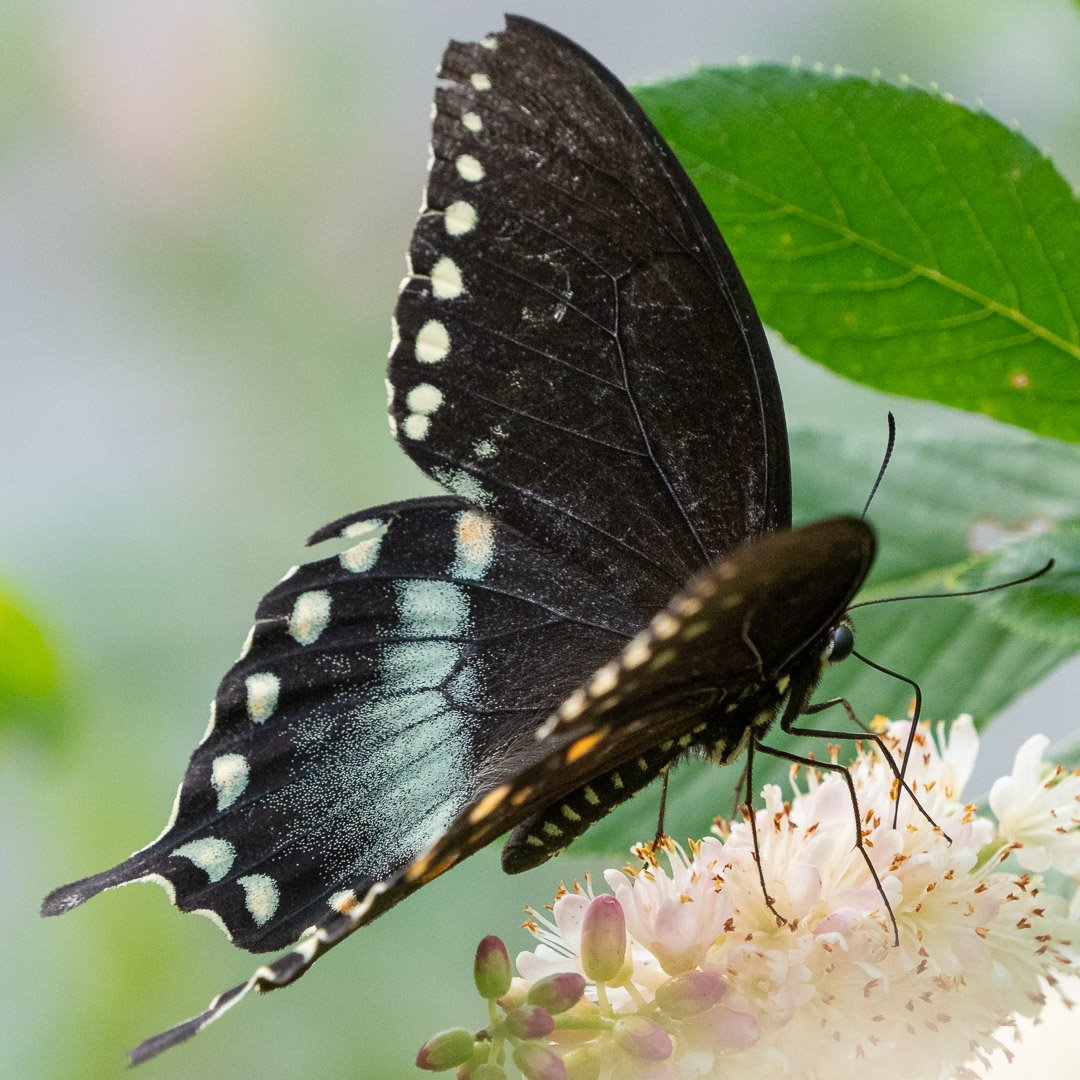
Spicebush Swallowtail
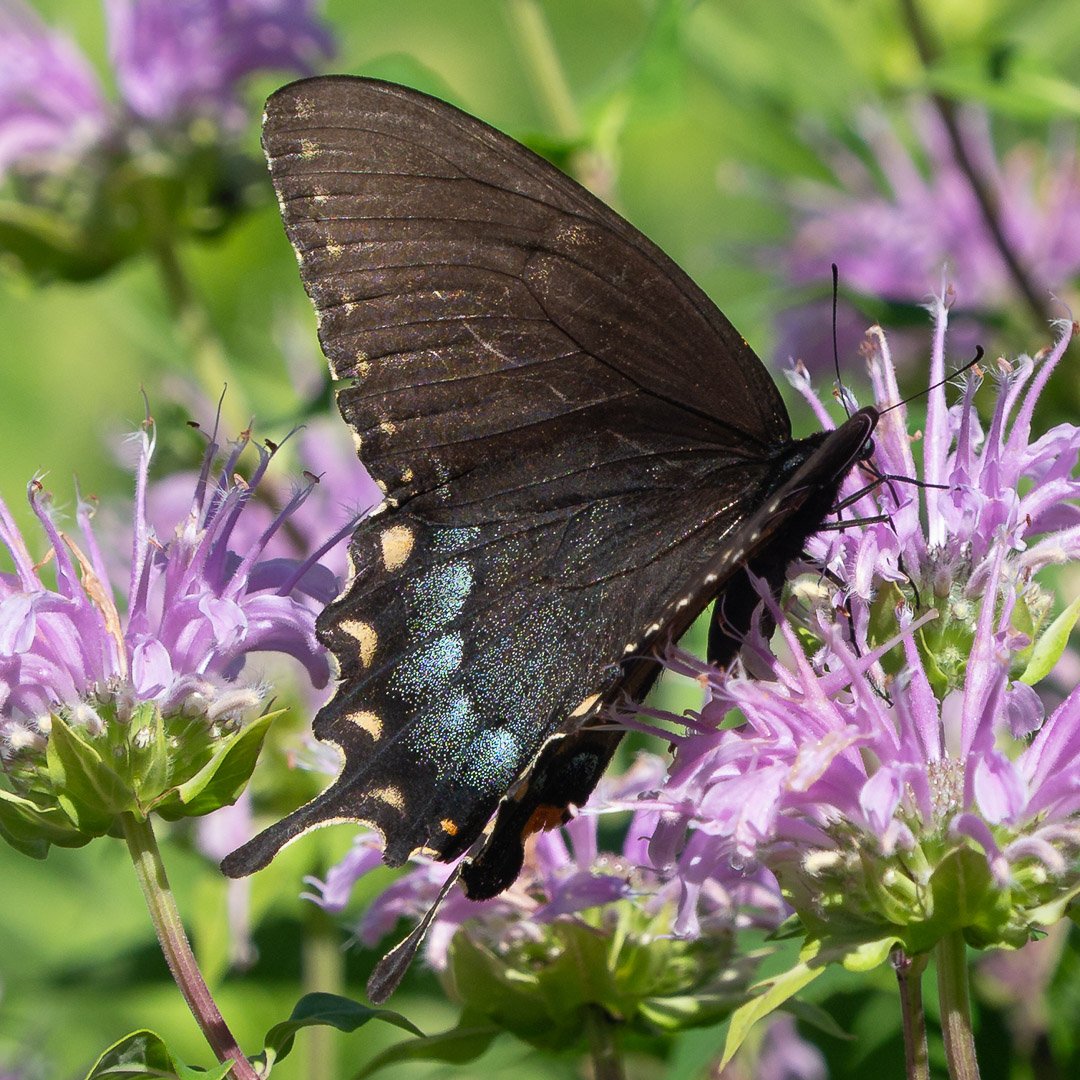
Eastern Tiger Swallowtail - can easily be confused with the female Spicebush
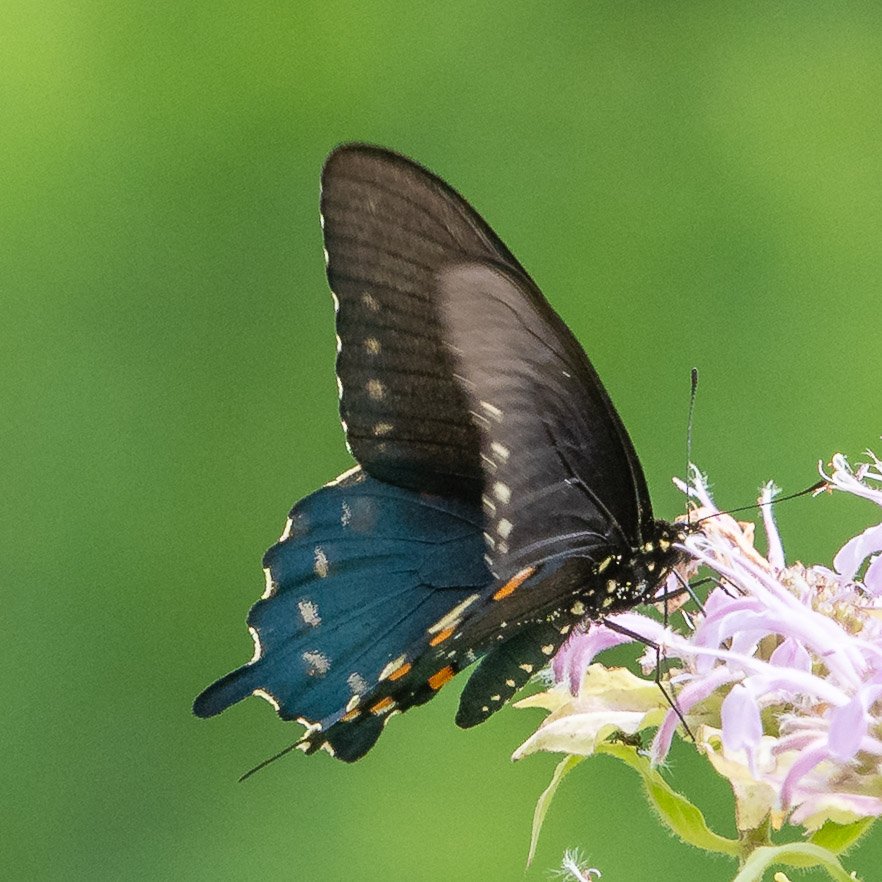
Pipevine Swallowtail - the standard being mimicked
There's another dark mimic!
The Red-spotted Purple butterfly is another mimic in this group to be aware of. While they don't have tails, many of the swallowtails get their tails eaten off by predators.
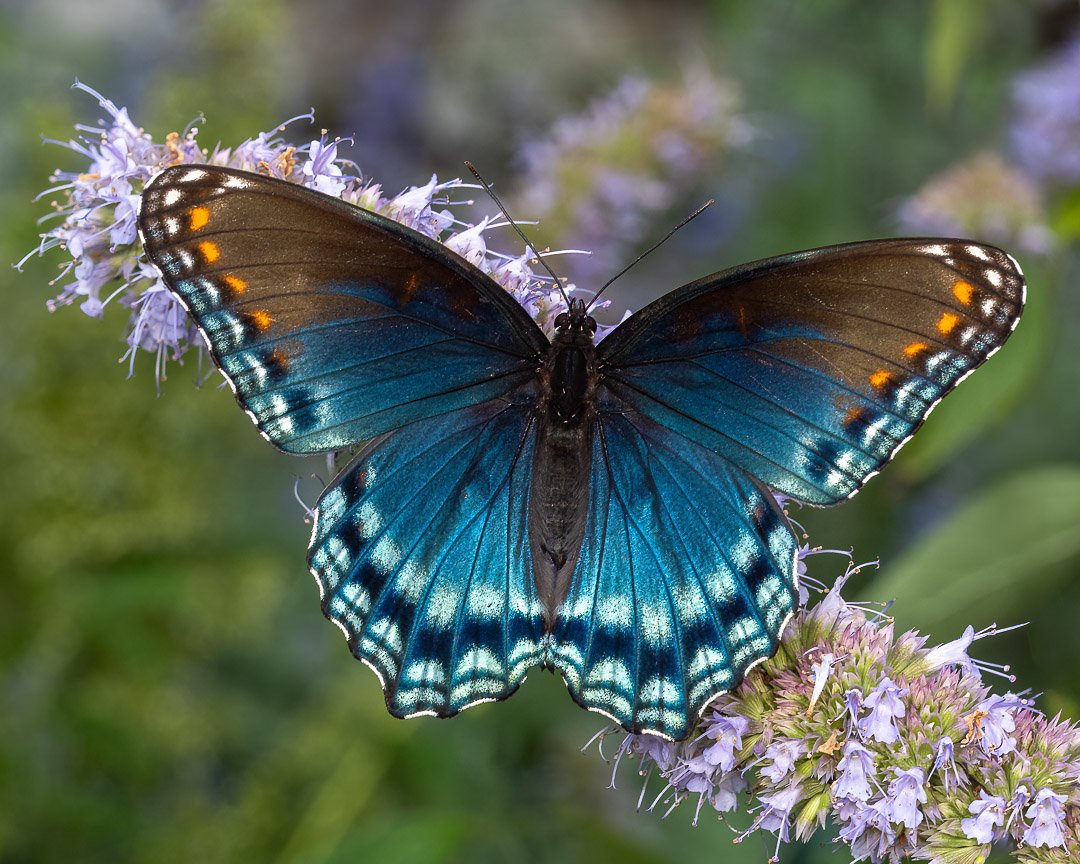
Red-spotted Purple upper side
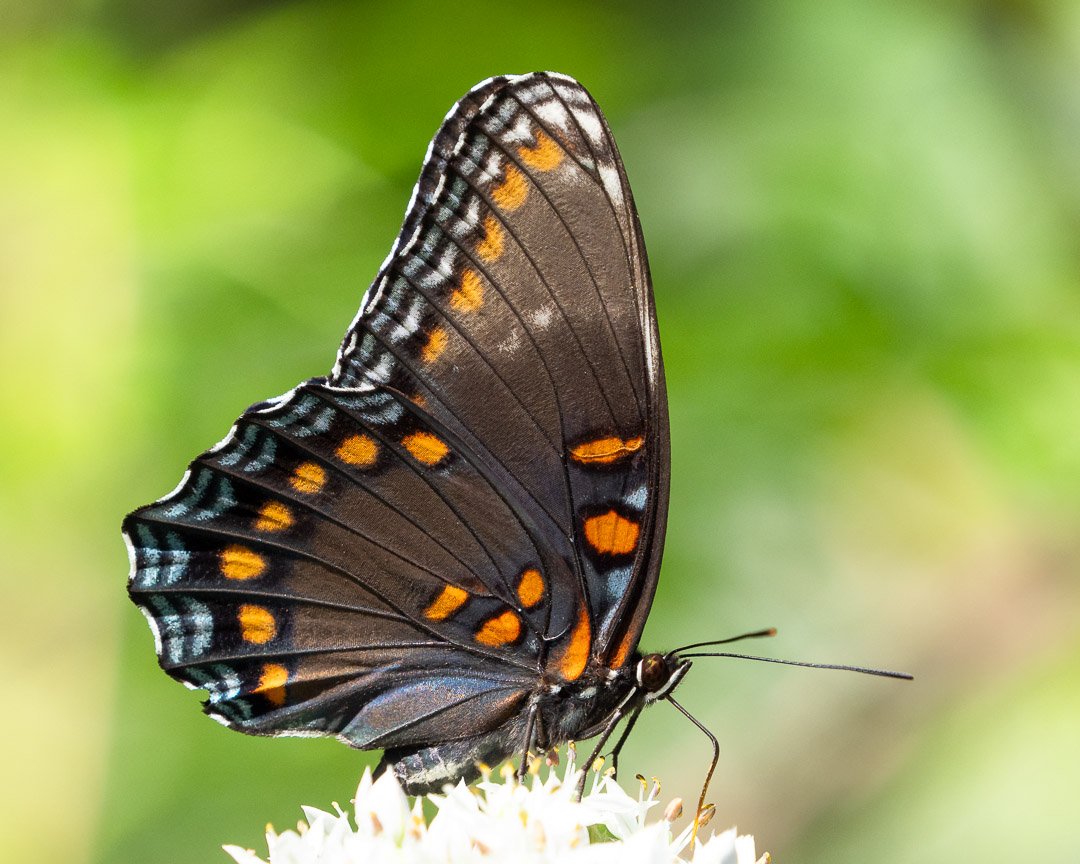
Red-spotted Purple under side
Gallery of Additional Dark Swallowtail Butterflies
Click on an image to activate a slideshow with titles and captions.


Test your skills
Click on an image to activate a slideshow with titles and captions.